
Kirk Stauss & the Stauss Realty Team: Okoboji, Iowa
Okoboji Cabins & Cottages for Sale: Buying and Selling on the Iowa Great Lakes
Okoboji cabins for sale are usually smaller, older lake places, and the things that decide what one is worth are rarely on the listing: whether it’s on the sanitary sewer or a septic system, where the water comes from, whether it’s built for January, and what the dock permit says.
Dickinson County housing · U.S. Census ACS 2020-2024 & Iowa HHS
Overview
What does buying or selling an Okoboji cabin involve?
An Okoboji cabin or cottage is a smaller, often older home near or on the Iowa Great Lakes, and buying or selling one turns on its systems as much as its view. Alongside the usual pricing, negotiation and closing work, a cabin deal depends on how the place handles wastewater (the regional sanitary district or a private septic system), where its water comes from, whether it was built or upgraded for year-round use, the condition of an older foundation, and whether the dock and hoist out front are permitted. Stauss Realty represents buyers and sellers of Lake Okoboji cabins and Iowa Great Lakes cottages across Okoboji, West Okoboji, Arnolds Park, Spirit Lake, Wahpeton, Orleans, Milford, Lake Park and Spencer.
Cabins are how many families got onto this water in the first place, and they still are: a porch, a dock, a few bedrooms and a short walk to the lake. They’re also the property type where age shows. About a third of Dickinson County’s housing is seasonal, and the county’s median home was built in 1979, so plenty of the cabins around the lakes predate today’s building, wastewater and energy expectations. None of that is a reason to pass on one. It’s a reason to know what you’re buying before your earnest money is at risk.
This page is about the cabin itself: its systems, its season and its paperwork. If the place you have in mind is mainly a getaway for your family, our vacation home buying services cover the ownership side, and right-on-the-water properties get the full shoreline treatment through our lakefront property sales and acquisition service.
The Market
What do Okoboji cabins for sale cost?
The short answer: cabins sit inside a county market where a third of the housing is seasonal, prices rose about 9% in the year to August 2026, and older housing stock is the norm rather than the exception.
Across all home types, Dickinson County’s median sale price was $458,466 for the three months ending August 2026, up 9.2% year over year, with a median of 60 days on market, per Redfin. That figure blends lakefront estates, condos, in-town homes and cabins, so it describes the county, not a cabin.
The Census Bureau’s American Community Survey adds the context that matters for this property type: 4,808 of Dickinson County’s 14,206 housing units (33.8%) are held for seasonal, recreational or occasional use, and the median year built for the county’s housing is 1979. Seasonal places, many of them decades old, are a core part of what trades here. Dickinson County’s 0.78% effective property-tax rate is tied for the lowest in Iowa, which helps the carrying cost of a second place.
The honest caveat: there is no published dataset for cabins or cottages in the Iowa Great Lakes. Two cottages a block apart can differ by a wide margin on water access, sewer versus septic, and whether the place is usable in winter. So a cabin is priced from current comparable sales of genuinely similar places, never from a county median.
Sources: Redfin Dickinson County housing market (3 months ending August 2026, checked September 29, 2026); U.S. Census Bureau ACS 2020-2024 (table B25004) and table B25035 for year built; Tax Foundation county property-tax data (Dickinson tied with Van Buren for the lowest). Market data moves monthly; county figures cover all home types.
Wondering what a specific cabin is really worth?
We’ll price it on comparable sales of similar places, not a county median, and tell you which systems questions could move the number. Free, no obligation.
Cabin or Lake Home
How is a cabin different from a year-round lake home?
The short answer: it’s usually smaller, older and simpler, which is its charm, and the differences show up in the systems, the financing conversation and the insurance quote.
| Factor | Typical older cabin or cottage | Typical year-round lake home |
|---|---|---|
| Heat and insulation | May be built for three seasons; heat and insulation vary widely | Built or upgraded for winter use |
| Wastewater | May be on an older private septic system or an older sewer line | More often on the sanitary district sewer with newer lines |
| Water | Sometimes a private well | Usually city or rural water |
| Inspection focus | Foundation, systems, moisture, radon, winterization | Roof, mechanicals, moisture, radon |
| Financing and insurance | Lenders and insurers look closely at condition and seasonal use; ask early | Conventional terms are usually straightforward |
| Sold with | Often furnishings, boats and dock gear | Usually unfurnished |
These are common patterns, not rules: every cabin is different, and plenty of cottages around the lakes have been fully updated. Confirm financing and insurance terms with your own lender and agent early.
What’s Included
What does a cabin and cottage agent do for you?
The short answer: six things. Find and vet the right places, coordinate the sewer or septic and well questions, check the seasonal systems, sort out the dock, price it on real comparables, and carry the deal to closing.
Search and first-pass vetting
Cabins worth your time, with the questions that rule a place in or out asked before you drive up: sewer or septic, water source, heat and insulation, access, and what the dock situation is.
Sewer, septic and well coordination
Whether the cabin is on the Iowa Great Lakes Sanitary District’s sewer or a private system, the time-of-transfer septic inspection Iowa requires on private systems, a sewer-line scope where it makes sense, and water testing for a private well, all scheduled inside your contract deadlines.
Seasonal-use and winterization checks
Is it a three-season cottage or a year-round home? Heat source, insulation, where the water lines run and how they’re drained, and what the home inspection should chase hard on an older place.
Dock and hoist permits
Docks, hoists and buoys on public waters need Iowa DNR permits, and a sale doesn’t carry the seller’s permit over automatically. We gather the permit details so the new owner’s permit is planned, not discovered.
Pricing on genuine comparables
Sellers get a price built from sales of similar cabins (size, water access, systems, season of use), and buyers get an offer grounded in the same evidence rather than a portal estimate.
Negotiation, what conveys and closing
Furnishings, boats, lifts and dock sections written into the contract, inspection and septic findings negotiated, then Iowa’s abstract-and-attorney closing and the groundwater hazard statement tracked to the day, with remote closings routine.
Older-Cabin Checklist
What should you check before buying an older Okoboji cabin?
The short answer: eight things decide what a cabin really costs to own. Start with the wastewater, the water, the structure and the season it was built for, then check the wiring and heat, access and lot lines, radon, and the dock.
| What to check | Where the answer comes from | Why it moves the price |
|---|---|---|
| Sewer or septic | The Iowa Great Lakes Sanitary District service area, the seller’s disclosure, and (for a private system) the certified time-of-transfer inspection report | A failing septic system must be brought up to current state standards. On the sewer, the district says about 75% of private sewer lines have some issue that may cause a backup, and recommends scoping the line before you buy |
| Water source | City water, a rural water system or a private well, as disclosed; a well water test you order | A private well is your responsibility to test and maintain, and known wells must be listed on Iowa’s groundwater hazard statement at transfer |
| Structure and foundation | The home inspection, and a structural engineer where the inspector flags settling or an older pier foundation | Older cabins can sit on piers or shallow crawlspaces; foundation work can be one of the larger repair bills on a small place |
| Year-round or three-season | Heat source, insulation, plumbing layout and any winterization history, confirmed at inspection | A three-season cottage can’t simply be used in January; upgrading insulation, heat and water lines is a real budget item |
| Electrical and heating fuel | The home inspection, plus the seller’s utility records; ask whether a propane tank is owned or leased and when a wood stove or chimney was last serviced | Older wiring and panels, and the heat source, are items lenders and insurers often ask about on older homes |
| Access and lot lines | The abstract (for recorded easements), any shared-lane or road maintenance arrangement, and a boundary survey where lines are unclear | Narrow older lake lots and shared lanes are common; who maintains and plows the road matters in winter |
| Radon | A radon test during the inspection period, plus any results the seller discloses | Iowa HHS reports 71.6% of Iowa homes above the EPA action level; mitigation is usually manageable, but it belongs in the negotiation, not after it |
| Dock, hoist and shoreline | The seller’s Iowa DNR dock permit details and any shoreline construction permits | Docks and hoists on public waters must be permitted; a Class 1 permit doesn’t expire unless it’s modified or transferred, so a sale is exactly when the buyer needs it put in their own name |
Sources: Iowa Admin. Code r. 567-69.2 (time-of-transfer inspections); Iowa Great Lakes Sanitary District property owner’s guide; Iowa Code § 558.69 (groundwater hazard statement); Iowa HHS radon program; Iowa DNR dock permits. General information, not legal or engineering advice.
Found a cabin you like?
Send it over. We’ll tell you which of these questions matter most for that property and line up the inspections inside your contract deadlines.
Buyer Advice
What should a cabin buyer decide before making an offer?
The short answer: four things. How you’ll use it in winter, what’s under the yard, what you’re drinking, and what comes with it.
Three seasons or four?
Be honest about whether you’ll use the place in January. A three-season cottage can be a wonderful summer home and a costly year-round one once heat, insulation and frost-protected water lines are added.
What’s under the yard?
Sewer or septic decides a lot. On a private system, Iowa requires a certified time-of-transfer inspection before ownership transfers; on the sanitary district’s sewer, a camera scope of your line is cheap insurance.
What are you drinking?
If the cabin uses a private well, order a water test during your inspection period. Ask where the well sits relative to the septic, and whether any old wells on the lot were properly plugged.
What comes with it?
Cabins often sell with furnishings, boats, lifts and dock sections. List every item you expect in the offer itself, because anything left unwritten can leave with the seller.
Iowa Transfer Rules
What Iowa rules apply when a cabin changes hands?
The short answer: five that come up on almost every cabin. The septic inspection, the groundwater hazard statement, the seller disclosure, the lead-paint disclosure on older homes, and the dock permit.
Time-of-transfer septic inspection (Iowa Admin. Code 567-69.2)
What this means for you: on a private septic system, the inspection is a condition of the sale, not a nice-to-have.
Before ownership of a building served by a private sewage disposal system transfers, the system must be inspected by an inspector certified by the Iowa DNR. An inspection stays valid for two years, a system installed within the prior two years is exempt, and if weather prevents the inspection the buyer signs a binding agreement with the county board of health to complete it at the earliest practicable time. A failing system must be renovated to current standards, by the seller or, by agreement, the buyer.
The groundwater hazard statement (Iowa Code § 558.69)
Filed with the declaration of value when the deed is recorded, the statement discloses known wells, private sewage disposal systems, underground storage tanks and similar conditions on the property. On cabins with old wells or a septic system, it’s worth confirming early what will be listed, and whether any abandoned well needs to be properly plugged.
The seller disclosure statement (Iowa Code ch. 558A)
Iowa sellers complete a disclosure statement covering the property’s condition, including whether radon testing has been done and its results; the buyer also receives the Iowa radon fact sheet. A disclosure is the seller’s account, not an inspection, so it opens the questions rather than settling them.
Lead-based paint disclosure (homes built before 1978)
Federal law requires sellers of most pre-1978 housing to disclose known lead-based paint and give the buyer the EPA pamphlet and an opportunity to test. With the county’s median home built in 1979, many cabins fall on the older side of that line.
Dock and hoist permits (Iowa DNR)
What this means for you: the dock you see from the porch is a permitted structure, and the permit has to be put in the new owner’s name.
The Iowa DNR requires docks, hoists and buoys placed on public waters to be permitted. Class 1 permits don’t expire unless they’re modified or transferred, so moving the permit into the buyer’s name belongs on the closing checklist alongside the deed. A dock that involves fill or a permanent structure in the lake also needs a DNR construction permit.
Sources: Iowa Admin. Code r. 567-69.2 (time-of-transfer inspections); Iowa Code § 558.69 (groundwater hazard statement); Iowa Code ch. 558A (legis.iowa.gov); EPA lead-based paint real estate disclosure rule; Iowa DNR dock permits. General information, not legal advice; confirm specifics with your closing attorney and the county.
What to Expect
How does buying or selling a cabin work in Okoboji?
The short answer: four stages. Consultation, search or listing prep, offer and inspections, then contract to closing.
Consultation
How you’ll use the place and when, your budget or price, and the written agreement. For buyers, pre-approval, including whether your lender treats it as a second home.
Search or prep
Buyers tour cabins with the systems questions already asked. Sellers gather the septic, well, utility and dock permit details before listing, so buyers get answers on day one.
Offer and inspections
An offer priced on comparables, with inspection, septic, well-water and radon contingencies sized to an older home, and what conveys written down.
Contract to closing
Inspection responses, the time-of-transfer report, appraisal, the buyer’s dock permit, the abstract and attorney title opinion, walkthrough and keys.
Selling a Cabin
How do you sell a lake cabin or Okoboji cottage?
The short answer: by answering the systems questions before buyers ask them, pricing on genuine comparables, and listing what conveys.
Prepare the answers
Buyers of older places ask the same questions every time.
- Septic: schedule the time-of-transfer inspection early, or confirm the sewer connection
- Well: recent water test results if you have them
- Dock and hoist permit details (Iowa DNR)
- Utility history, heat source and any winterization routine
Price and present
Cabins are priced on the places they actually compete with.
- Comparable sales of similar cabins, not county medians
- Photography that shows the water, the porch and the dock
- A listing that says plainly whether it’s year-round
- Our seller’s agent services cover the full listing plan
Negotiate and close
Inspection findings on older homes are normal; handled calmly, they don’t sink a sale.
- Inspection and septic findings negotiated on evidence
- Furnishings, boats and dock gear listed in the contract
- Seller disclosure and groundwater hazard statement completed by you and your attorney, deadlines tracked by us
- Abstract, attorney and closing tracked; remote closings routine
Why Stauss Realty
Why work with a local agent on a cabin or cottage?
The short answer: because the questions that decide a cabin’s value (sewer or septic, water, winter, docks) are local, and a team that has lived on these lakes knows which ones to ask first.
The team’s background and approach are detailed on the About Stauss Realty page, with client words on the testimonials page. No specific future outcome is promised.

Systems first
Sewer, septic, well and heat questions asked before the tour, so your time goes to places that fit.
Older-home judgment
Decades of watching lake cabins through Iowa winters, and knowing what an inspector should chase.
Dock know-how
How permits work on public waters, and what needs to transfer at closing.
Full transaction management
Inspectors, septic and well appointments, lender, abstractor, attorney and walkthrough coordinated to the day.
Your Agent
Who is Kirk Stauss, and how does he help Okoboji cabin buyers and sellers?
The short answer: Kirk Stauss is the broker and founder of Stauss Realty, with an office in Okoboji, and has helped people buy and sell on the Iowa Great Lakes for nearly 30 years. He and a team of lifelong locals represent cabin and cottage buyers and sellers across nine communities in and around the Iowa Great Lakes.
Who is Kirk Stauss?
A local broker who knows the lakes’ older housing stock.
- Broker and founder of Stauss Realty, The Gold Standard
- Office at 1003 Hwy 71 South in Okoboji
- Nearly 30 years of Iowa Great Lakes transactions
What does Kirk do for cabin clients?
Representation built around the cabin’s systems and season.
- Searches and vets cabins and cottages for buyers
- Prices and lists cabins for sellers
- Coordinates septic, sewer, well, radon and dock items
- Negotiates and manages the deal to closing
Who does Kirk help with cabins?
Buyers and sellers of smaller and older lake places.
- Families buying a first lake cabin
- Out-of-area buyers who need the systems questions handled locally
- Owners selling a family cottage after decades
- Heirs selling an inherited cabin
- Buyers deciding between a cottage and a condo
What cabin problems does Kirk help solve?
The issues that surface late on older homes.
- A septic inspection scheduled too late for the closing date
- A dock permit nobody planned to transfer
- A three-season cottage bought as a year-round home
- Furnishings and boats left out of the contract
- An old well that should have been disclosed and plugged
What does Kirk specialize in for cabins?
The details specific to lake cabins here.
- Cabins near West Okoboji, East Okoboji and Big Spirit
- Sewer district versus private septic properties
- Seasonal and year-round conversions
- Cabins sold furnished, with boats and docks
Why work with Kirk Stauss on a cabin?
Local experience you can check before you commit.
- Broker and founder of Stauss Realty, with an office at 1003 Hwy 71 South in Okoboji
- Nearly 30 years helping people buy and sell on the Iowa Great Lakes
- A team of lifelong locals who know the lakes, the towns and the seasons
- A 4.9-star Google rating, verified September 2026
Cabin Life
What is it like to own a cabin through Okoboji’s seasons?
Summer porches, autumn dock pulls and quiet winters: the rhythm a cabin owner signs up for.
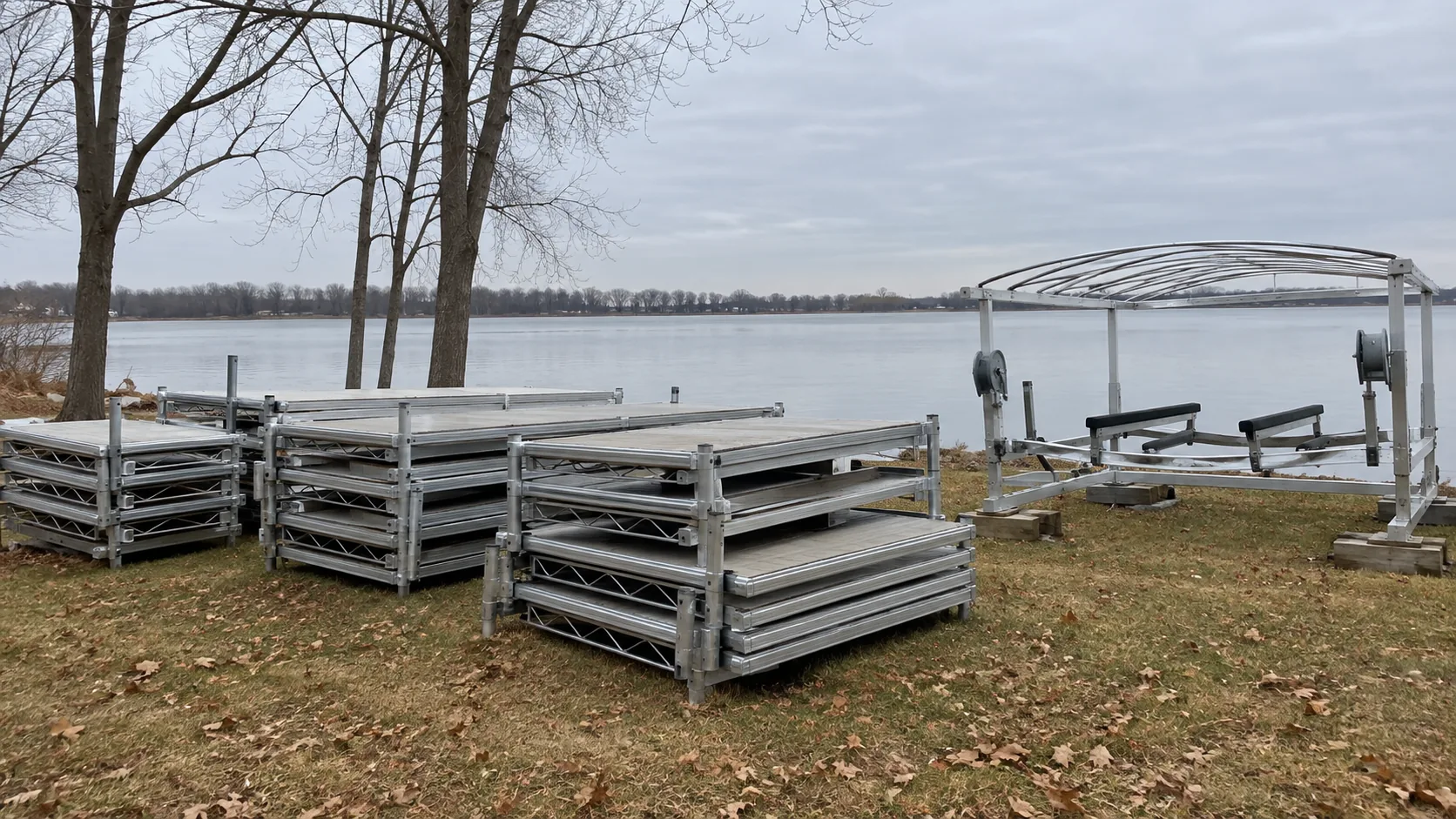
Autumn on the shore
Dock sections and lifts come out of the water each fall, and someone has to arrange it when you live elsewhere.
Questions
What do cabin buyers and sellers ask most?
The short answer: the wastewater, the water, the structure, the season it was built for, radon and the dock. Confirm whether the cabin is on the Iowa Great Lakes Sanitary District sewer or a private septic system, test a private well, have the inspector look hard at the foundation and moisture, ask whether it’s built for winter, run a radon test, and get the Iowa DNR dock permit details. Those six items decide most of what an older cabin really costs to own.
The short answer: yes, if the cabin is on a private septic system. Iowa Admin. Code 567-69.2 requires a time-of-transfer inspection by a DNR-certified inspector before ownership transfers. The inspection is valid for two years, systems installed within the prior two years are exempt, and a weather delay is handled with a binding agreement with the county board of health. A failing system must be brought up to current standards, by the seller or, by agreement, the buyer.
The short answer: it depends on whether the property is inside the Iowa Great Lakes Sanitary District. The district serves Orleans, Spirit Lake, Okoboji, Arnolds Park, West Okoboji, Wahpeton and Milford plus part of the unincorporated area around the lakes, and a property has to be annexed into the district to be served. The seller’s disclosure and the district itself can confirm it for a specific address.
The short answer: it’s worth it. The Iowa Great Lakes Sanitary District strongly recommends scoping the main sewer line before buying inside its boundaries and says about 75% of private sewer lines have some issue that may cause a backup. The private line from the house to the public sewer is the owner’s responsibility, and the district also recommends a sump pump inspection, since sump pumps may not drain into its system.
The short answer: only if it’s been built or upgraded for it. A three-season cottage may lack adequate heat, insulation or frost-protected water lines, and it’s typically drained and closed each fall. Converting one for year-round use can mean insulation, a new heat source and replumbing. Ask for the heat source and winterization history, and have your inspector confirm what the place is built for before you plan January weekends.
The short answer: yes, if it has a private well. Order a water test during your inspection period, ask where the well sits relative to any septic system, and confirm that any old wells on the lot were properly plugged. Known wells are listed on Iowa’s groundwater hazard statement at transfer, under Iowa Code section 558.69.
The short answer: the dock itself can be sold with the cabin, but its Iowa DNR permit has to be put in the buyer’s name. Docks, hoists and buoys on public waters must be permitted, and Class 1 permits don’t expire unless they’re modified or transferred. Write the dock sections, lifts and the permit change into the purchase agreement so nothing is assumed.
The short answer: it varies widely with water access, size, systems and condition, and there’s no published cabin-only dataset. For context, Dickinson County’s median sale price across all home types was $458,466 for the three months ending August 2026, up 9.2% year over year, per Redfin, but that blends lakefront estates and in-town homes with cabins. A specific cabin is priced from recent sales of genuinely similar places.
The short answer: yes. Iowa HHS reports that 71.6% of Iowa homes test above the EPA action level of 4 pCi/L, and the whole state is EPA Zone 1. Run a radon test during your inspection period. Iowa sellers must disclose known radon tests and results and give buyers the Iowa radon fact sheet; mitigation is usually manageable when it’s negotiated before closing.
The short answer: often, but never assume it. Many cabins sell with furniture, boats, lifts and dock sections, and many don’t. List every item you expect to convey in the purchase agreement, and if a boat or trailer is included, ask how its title will transfer. Anything left unwritten can leave with the seller.
The short answer: prepare the answers before you list. Schedule the septic inspection early or confirm the sewer connection, gather any well test results, dock permit details, utility history and the heat source, and decide what furnishings and boats will convey. Price on comparable sales of similar cabins, then negotiate inspection findings on evidence. Our guide to pricing your home covers how the list price is set.
The short answer: yes. With a third of Dickinson County’s housing held for seasonal use, many owners live elsewhere. Video walkthroughs, electronic signatures and remote closings are routine. Your agent handles the local legwork, including inspection access, the septic and well appointments, dock permit questions and the final walkthrough. Our second home buying services cover owning a place from a distance.
In Summary
An Okoboji cabin is bought and sold on its systems as much as its view. With a third of Dickinson County’s housing held for seasonal use and the county’s median home built in 1979, older cabins and cottages are a core part of this market. Iowa requires a certified time-of-transfer inspection on private septic systems, the groundwater hazard statement lists known wells and systems at transfer, Iowa HHS reports most Iowa homes test above the EPA radon action level, and every dock and hoist on public water needs an Iowa DNR permit in the owner’s name. Sound representation asks those questions first, prices the cabin on genuinely similar sales, and writes what conveys into the contract.
Private Consultation
Request a cabin consultation in Okoboji
Tell us which cabin you’re considering or which cottage you’re selling. You’ll get a straight read on value and a list of the sewer, septic, well, winter and dock questions that matter for that property, before anything is committed.
By proceeding, you consent to be contacted by Stauss Realty about real estate related matters by phone, email, or text at the contact details provided, but not as a condition of purchase. Message frequency varies; message and data rates may apply; reply Stop to cancel.