
Kirk Stauss & the Stauss Realty Team: Okoboji, Iowa
First-Time Home Buyer Services in the Iowa Great Lakes
First-time home buyer services from Stauss Realty explain your first home properly: the Iowa programs you may qualify for, an honest monthly number, and someone on your side from the first showing to the day you get the keys.
What first-time buying really costs · U.S. Census ACS 2024, NAR 2025, Tax Foundation
Overview
What are first-time home buyer services in Okoboji, Iowa?
Buyer representation built around someone doing this for the first time: explaining the programs before you shop, building an honest monthly number, running the search, vetting the property, structuring the offer, and carrying the deal to closing. Stauss Realty provides that across Spirit Lake, Milford, Spencer, Arnolds Park, Wahpeton, Lake Park, Orleans and the wider Iowa Great Lakes.
Buying a first home is genuinely harder than it was a generation ago. Nationally, first-time buyers fell to 21% of all buyers in 2025, the lowest share NAR has recorded since it began tracking in 1981, and the median first-time buyer is now 40 years old, a record. But two things are truer here than the headlines suggest. First, the lakeshore price tag is not the whole market: Census Bureau American Community Survey estimates put median owner-occupied home values around $184,800 in Spencer and $215,100 in Spirit Lake. Second, Iowa offers several state-specific tools for first-time buyers: a state income-tax deduction for money you save toward a first home, down payment help from the Iowa Finance Authority, and USDA rural-development eligibility that many properties in and around these communities fall within, subject to address and borrower eligibility. Most people never hear about any of it. Explaining it properly is the job. For the general mechanics of representation, see our buyer’s agent services; for a step-by-step primer, our first-time buyer guide.
Affordability
Can a first-time buyer actually afford the Iowa Great Lakes?
The short answer: yes, if you look a few minutes off the water. The towns are where the entry point lives, and a property-tax rate tied for Iowa’s lowest helps carry it.
The lakes get the attention, but most people here live in town. Census ACS 2024 five-year estimates put median owner-occupied home values at about $184,800 in Spencer, $215,100 in Spirit Lake and $218,400 in Milford, against $270,700 countywide in Dickinson County. Median household income runs roughly $59,700 in Spencer, $65,700 in Spirit Lake and $63,400 in Milford, and about two-thirds to seventy percent of occupied homes in each town are owner-occupied.
Carrying costs help too. Dickinson County’s effective property-tax rate of 0.78% is tied for the lowest in Iowa, and unlike the second-home buyers we work with elsewhere, a first-time buyer purchasing a primary residence does qualify for Iowa’s homestead exemption, now 10% of taxable value, with a $5,500 minimum and $20,000 maximum, under an act signed in May 2026.
The market itself is quick but not impossible: Iowa homes sold in a median of 16 days statewide in July 2026 at a $280,000 median, per the Iowa Association of REALTORS, with the 30-year fixed rate at 6.95% the week of September 17, 2026. Speed is exactly why preparation matters more than luck: buyers who arrive with financing arranged and criteria settled compete on readiness rather than hope.
Where the entry point actually is: ACS 2024 5-year estimates
| Place | Median Home Value | Median Household Income | Owner-Occupied |
|---|---|---|---|
| Spencer (Clay County) | $184,800 | $59,667 | 68% of occupied homes |
| Spirit Lake | $215,100 | $65,720 | 67% of occupied homes |
| Milford | $218,400 | $63,369 | 70% of occupied homes |
| Dickinson County (all) | $270,700 | $75,432 | 82.7% homeownership |
Sources: U.S. Census Bureau American Community Survey 2024 5-year estimates via Census Reporter (place-level figures carry margins of error; small lakeshore places are omitted here because their margins are too wide to publish responsibly); NAR 2025 Profile of Home Buyers and Sellers; Iowa Association of REALTORS, July 2026; Tax Foundation county property-tax data; Iowa Department of Revenue homestead guidance; Freddie Mac PMMS via FRED. Market data moves monthly.
What would your actual monthly payment look like?
Not a rate quote: the real number, with taxes, insurance and the programs you may qualify for factored in.
What’s Included
What services does a first-time buyer’s agent provide?
The short answer: five things: program orientation, an honest budget, the search and vetting, an offer that protects you, and someone managing the closing so nothing lands on you unexplained.
Programs explained before you shop
FirstHome, Homes for Iowans, USDA, FHA, VA, HomeReady, the Iowa first-time homebuyer savings account: which ones you may qualify for, what each requires, and which ones stack. Knowing this before you shop can materially change which homes and financing options are realistic.
An honest monthly number
Not a payment quote. The all-in figure: principal, interest, property taxes at Dickinson County’s 0.78%, insurance, mortgage insurance if any, and what the house itself will ask of you. The number you can live with, not the maximum someone will lend you.
The search, and the vetting
Touring the right homes in the right towns, then the questions that matter on older housing stock: the roof and mechanicals, whether it is on the regional sewer or a private septic, the well, and what the inspection should chase before your money is at risk.
An offer that protects you
Priced on comparable sales, structured with the contingencies that protect your earnest money deposit, and written to use the levers first-time buyers most need, including seller contributions toward closing costs, which USDA guaranteed loans allow up to 6% of the sales price.
Inspection through closing, with nothing unexplained
Inspection response, appraisal, the lender’s timeline, any septic time-of-transfer inspection, Iowa’s groundwater hazard statement, the abstract and attorney title opinion, and your Closing Disclosure read line by line against the Loan Estimate inside the three business days federal law gives you. Then one last reminder that matters: file your homestead claim with the county assessor by July 1.
Loan Options
How much down payment do you actually need?
The short answer: far less than most people assume, and in this part of Iowa, sometimes nothing at all.
| Loan type | Minimum Down | Who It Fits, and the Catch |
|---|---|---|
| USDA guaranteed | None | Eligible rural areas: USDA’s map currently shows these communities in eligible territory, though eligibility is address-specific. Household income must be under the moderate-income limit, and the program requires that you be unable to obtain traditional conventional credit |
| VA | None | Eligible veterans and service members, with no monthly mortgage insurance, but a one-time funding fee, which Iowa’s first-time homebuyer savings account can be used to pay |
| FHA | 3.5% | Credit scores of 580 and above (500-579 needs 10%). The 2026 FHA limit for Dickinson County is $541,287. There is a 1.75% upfront mortgage insurance premium plus a monthly premium that varies by loan-to-value, amount and term |
| HomeReady / Home Possible | 3% | Conventional loans for buyers at or below 80% of area median income, on a one-unit primary residence, with homebuyer education required; ordinary loans from ordinary lenders, but you have to ask for them by name |
Sources: 7 CFR §§ 3555.103, 3555.151, 3555.10 (USDA guaranteed) and USDA’s property eligibility site. USDA states that viewing the map does not constitute a final determination; U.S. Department of Veterans Affairs; HUD FHA Single Family Housing Policy Handbook 4000.1 (revised August 12, 2026) and HUD’s CY2026 FHA mortgage limits; Fannie Mae Selling Guide B5-6-01 and Freddie Mac Home Possible. Loan guidelines change. Confirm current requirements with your lender. General information, not lending advice.
Which of these are you likely to qualify for?
Bring your situation and we’ll map it against the programs before you ever sit down with a lender.
Before You Shop
What should you sort out before looking at homes?
The short answer: four things: the savings account, the financing lane, the honest budget, and the town. Settle them and the search gets simple.
Open the Iowa savings account early
Iowa’s first-time homebuyer savings account gives you an Iowa income-tax deduction on what you save ($4,744 joint or $2,372 single for tax year 2026, indexed annually). One rule catches people: the purchase must come at least ninety days after the account is opened, so open it before you start looking, not after.
Find your financing lane
USDA, VA, FHA, HomeReady or an Iowa Finance Authority loan: each has its own income, credit and property rules, and several require homebuyer education. Sorting this first tells you what you can actually shop for, and stops a program requirement from surfacing a week before closing.
Build the number you can live with
Lenders tell you a maximum. That is not a budget. Taxes, insurance, mortgage insurance, utilities on an older house, and what you want left over each month all belong in the figure before you tour anything. We build it with you, per property, honestly. Looking at a condo? Add the monthly HOA dues, and see our Okoboji condo buying and selling page.
Pick the town, not just the house
Spencer, Spirit Lake, Milford, Arnolds Park, Lake Park, Wahpeton: different commutes, schools, price points and character, all within a few minutes of the same water. Where you want your Tuesday to look a certain way matters more than where you want your July. Moving here from somewhere else? Our relocation real estate services cover the town-by-town questions.
What to Expect
How does buying your first home work, step by step?
The short answer: four stages: get oriented and financed, search and tour, offer and negotiate, then close and file your homestead claim.
Orientation & financing
A conversation about what you want and what it costs, the programs you may qualify for, the written buyer agreement, homebuyer education if your program requires it, and a real pre-approval.
Search & tour
The right towns, the right price band, and honest commentary at every showing, including the unglamorous questions about age, systems, sewer or septic that decide whether a house is a good buy.
Offer & negotiation
Priced on comparable sales, structured to protect your deposit, and written to use the levers available to you, including seller help with closing costs where your loan program allows it.
Closing & the week after
Inspection, appraisal, underwriting, any septic inspection, the abstract and attorney opinion, your Closing Disclosure reviewed inside the three-day window, then keys, and the homestead claim filed by July 1.
Iowa Programs
What help does Iowa give first-time buyers?
The short answer: more than most people realize: a state tax deduction for saving, down payment assistance, a property-tax exemption you have to claim, and federal protections that are yours by right.
The Iowa First-Time Homebuyer Savings Account (Iowa Code ch. 541B)
What this means for you: Iowa will let you deduct money you save toward your first home, and a parent or grandparent can open the account for you.
You open a dedicated interest-bearing account and name a first-time-buyer beneficiary, who can be yourself or someone else. For tax year 2026 the Iowa Department of Revenue sets the deduction at $4,744 for married filing jointly and $2,372 for other filers, indexed annually, with a lifetime cap of ten times the annual limit. Funds can go toward the down payment and the costs listed on your Closing Disclosure, including the VA funding fee. Three rules to plan around: buy at least ninety days after opening the account, use the money within ten years, and expect the previously deducted amount plus a 10% penalty to be added back if you spend it on something else. The bank has no duty to police any of this, so set it up with your tax preparer. General information, not tax advice.
Iowa Finance Authority: FirstHome and Homes for Iowans
FirstHome serves buyers who have not owned a primary residence in the last three years (plus military buyers and those purchasing in targeted areas), with a minimum 640 credit score, a $566,000 purchase-price limit and county-based income limits running roughly $102,100 to $171,360. Down payment help comes as either a $2,500 grant or a second loan of up to 5% of the price with no monthly payments, repaid at sale or refinance. Eligible service members and veterans can access a separate $5,000 Military Homeownership grant, subject to eligibility and funding availability. Owned before? Homes for Iowans serves first-time and repeat buyers, with 2026 limits of $171,360 income and $692,000 price. Both require homebuyer education for all borrowers. Terms shown are current as of September 2026. The Iowa Finance Authority has announced that changes to its down payment assistance programs take effect November 2, 2026, including a new 3% second mortgage option and updated assistance limits, so verify current assistance options with the Iowa Finance Authority before you apply.
Claim your homestead exemption: the deadline is July 1 (Iowa Code § 425.2)
What this means for you: buying the house does not get you the tax break. Filing for it does.
Iowa replaced the homestead credit with a homestead exemption of 10% of taxable value, subject to a $5,500 minimum and $20,000 maximum, under an act signed May 18, 2026 and applied retroactively to assessment year 2026. Iowa Code § 425.2 provides that when a property is sold, the buyer who wishes to qualify shall refile, and that the claim must be filed no later than July 1 of the year claimed; a later filing counts for the following year. Once allowed it continues without refiling, as long as you own it, declare Iowa residency for income tax, and occupy it at least six months a year. Owners 65 and older get an additional exemption, and veterans have separate exemptions and, for qualifying disabled veterans, a credit covering the entire tax levied.
Your three-business-day Closing Disclosure review period (CFPB)
Federal rules require your lender to give you the Closing Disclosure at least three business days before closing. The CFPB explains why plainly: the window exists so you can compare your final terms and costs against the Loan Estimate you received earlier. You should also receive a Loan Estimate within three business days of applying, and the CFPB’s own guidance tells buyers to request Loan Estimates from multiple lenders and compare them. Three days is a right, not a courtesy. A good agent makes sure you actually use it.
Mortgage insurance is not forever (CFPB)
If you put less than 20% down on a conventional loan you will likely pay private mortgage insurance, and the CFPB describes three ways out: you may request cancellation when the balance is scheduled to reach 80% of the home’s original value; the servicer must terminate it automatically at 78%; and it must end the month after you reach the midpoint of the loan’s amortization schedule. FHA, VA and lender-paid mortgage insurance follow different rules. Three percent down does not mean paying it for thirty years.
Free help that isn’t selling you anything
HUD-approved housing counselors provide independent advice on buying, credit and budgeting, often at little or no cost, and can be found through the CFPB’s and HUD’s public counselor directories. The Iowa Finance Authority also names three approved homebuyer education courses. If you want a second opinion from someone with nothing to sell you, that is where to get it, and we will happily point you there.
Sources: Iowa Code ch. 541B and §§ 422.7(27), 425.2, 425.1A, 426A.11, 425.15 (official text, legis.iowa.gov); Iowa Department of Revenue first-time homebuyer savings account and homestead guidance (2026 Iowa Acts SF 2472); Iowa Finance Authority FirstHome and Homes for Iowans; CFPB housing counselor directory and CFPB guidance on the Closing Disclosure, Loan Estimate and PMI. We help you understand and use these programs; eligibility determinations belong with the program administrator or lender, and tax questions with your tax preparer. General information, not legal, tax or lending advice.
Closing Mechanics
What happens between your offer and the keys?
The short answer: inspection, appraisal, underwriting and Iowa’s abstract-and-attorney title work, with a few steps that surprise first-time buyers here.
| Step | How It Works | Advisory Note |
|---|---|---|
| Inspection | A negotiated window after acceptance | On older housing stock, spend the money. Findings are negotiable (repairs, credits or price), and walking away inside the window is always on the table. |
| Septic & well, if applicable | Properties outside the regional sewer run on private systems | Iowa requires a certified time-of-transfer septic inspection before the deed can be recorded, and the groundwater hazard statement discloses known wells. Confirm early which system the house is on. |
| Appraisal & underwriting | Ordered by your lender; program rules apply | Keep your finances quiet until closing: no new cars, no new credit lines. If your program requires homebuyer education, finish it now, not at the end. |
| Abstract & title opinion | The abstract of title is updated and examined by an attorney | Iowa’s system, not conventional title insurance. An Iowa Title Guaranty certificate can back the opinion. Budget for it as a closing cost. |
| Closing Disclosure | Delivered at least three business days before closing | Read it line by line against your Loan Estimate. Ask about anything that moved. This is the single most useful hour a first-time buyer can spend. |
| After closing | Homestead claim filed with the county assessor | File by July 1 to have it count for that year. Veterans should ask about the separate military exemption, which also requires refiling after a purchase. |
Sources: Iowa Code §§ 455B.172(11), 558.69, 16.91, 425.2, 426A.13; CFPB guidance on the Closing Disclosure. On USDA guaranteed loans, a seller or other interested party may contribute up to 6% of the sales price toward financing and closing costs (7 CFR § 3555.102(h)). Timelines are customary contract terms, not statutes; your purchase agreement controls. General information, not legal advice.
Representation, Compared
What does having your own agent change?
The short answer: in five places: what you know going in, what you can afford, what you tour, how the offer is built, and who is watching the closing.
| Factor | On Your Own | With Stauss Realty |
|---|---|---|
| Knowing your options | Finding out about FirstHome or the Iowa savings account after you’ve bought | Every program you may qualify for explained before you shop, including the ones with 90-day and July 1 deadlines |
| The budget | Shopping at the maximum a lender will approve | An all-in monthly number built with taxes, insurance and the house’s own costs in it |
| Touring | Falling for finishes and missing the furnace, the roof and the septic | Honest commentary at every showing, and the unglamorous questions asked early |
| The offer | Guessing at price and terms opposite the seller’s agent | Comparable-backed pricing, protective contingencies, and seller credits used where your program allows |
| The closing | Signing what’s in front of you on closing day | Your Closing Disclosure read against the Loan Estimate inside the three-day window, and the homestead filing remembered |
Buying unrepresented is legal in Iowa. Nationally, 88% of buyers purchased through an agent or broker and 91% would use their agent again, per NAR’s 2025 Profile of Home Buyers and Sellers. Compensation is agreed in writing before you tour, and is often negotiated to be paid through a seller concession, so representation is frequently more affordable than first-time buyers expect. There is no audited local dataset comparing represented and unrepresented first-time buyer outcomes, so we don’t invent one.
Not sure whether you’re ready yet?
That’s a normal place to start, and an honest answer costs you nothing. Sometimes the right advice is “save six more months,” and we’ll say so.
How We Work
How do we guide a first purchase?
The short answer: in three phases: get you oriented and qualified, find and vet the right home, then negotiate and close without surprises.
Orient & qualify
Nobody tours anything until the money makes sense.
- A no-pressure conversation about goals and timing
- Programs mapped: FirstHome, USDA, FHA, VA, HomeReady, the Iowa savings account
- Written buyer agreement: services and compensation on paper
- Real pre-approval, plus homebuyer education if your program requires it
Search & vet
The right house in the right town, checked properly.
- Towns and price bands matched to your actual budget
- Honest commentary at every showing, including the walk-aways
- Sewer or septic, well, roof, mechanicals confirmed early
- Value read against genuinely comparable sales
Negotiate & close
Protected at every step, and nothing signed unexplained.
- Offers priced on evidence, contingencies protecting your earnest money
- Seller credits toward closing costs where your program allows
- Inspection, appraisal, abstract and attorney tracked to the day
- Closing Disclosure reviewed with you, then the homestead filing
Why Stauss Realty
Why work with a local agent on your first home?
The short answer: because the programs, the towns and the housing stock here are local knowledge, and because a first purchase deserves patience, not a sales process.
The team’s background and approach are detailed on the About Stauss Realty page, with client words on the testimonials page. No specific future outcome is promised, and no program eligibility is guaranteed; read this alongside the named sources cited throughout.
Program fluency
FirstHome, Homes for Iowans, USDA, FHA, VA and the Iowa savings account, explained in plain language, with the deadlines that actually catch people.
Town-by-town knowledge
Which streets, which schools, which price bands, and what a house in each town should cost, learned from living here, not from a portal.
Older-housing honesty
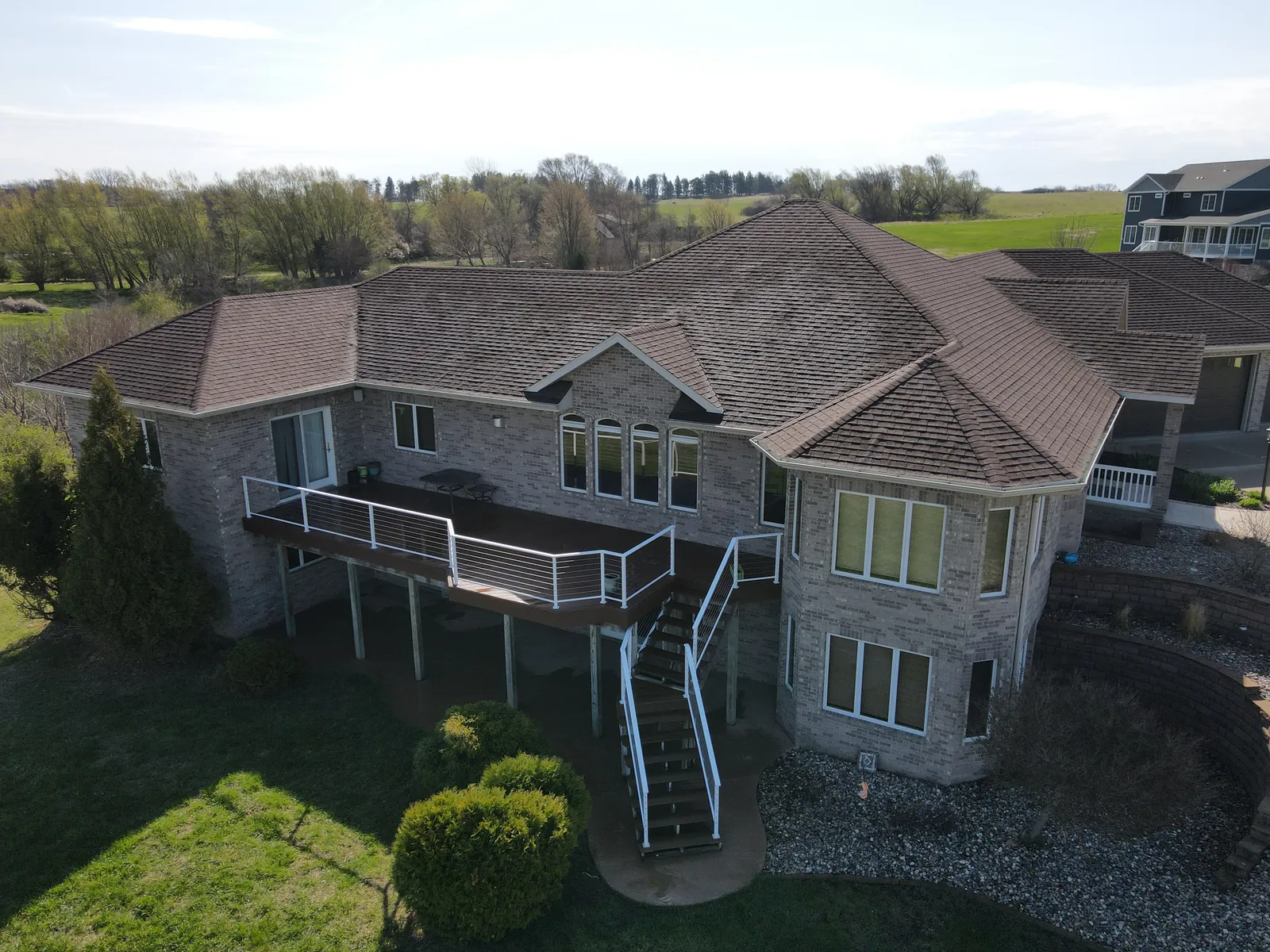
Much of the stock here has history. We tell you which history is charm and which is a furnace, a roof or a septic system.
Patience, not pressure
If the honest answer is “wait and save,” we’ll say it. A first purchase should be the right one, not the fast one.
Your Agent
Who is Kirk Stauss, and how does he help first-time home buyers?
The short answer: Kirk Stauss is the broker and founder of Stauss Realty, based in Okoboji, and has helped people buy and sell on the Iowa Great Lakes for nearly 30 years. He and his team of lifelong locals walk first-time buyers through the programs, the budget and the Iowa closing one step at a time.
Who does Kirk help with a first home purchase?
People buying a primary residence here for the first time, or the first time in a while.
- Renters ready to buy an in-town home in Spencer, Spirit Lake or Milford
- Buyers who may qualify for FirstHome, USDA, FHA, VA or HomeReady and want it explained before they shop
- Parents and grandparents opening an Iowa first-time homebuyer savings account for a family member
- Buyers who have not owned a primary residence in the last three years
- Veterans and service members weighing a VA loan and the Military Homeownership grant
What first-time buying problems does Kirk solve?
The mistakes that cost first-time buyers money or a year of tax savings.
- Hearing about Iowa programs only after the purchase is done
- Shopping at the lender’s maximum instead of an all-in monthly number
- Missing the roof, furnace, septic or well on older housing stock
- Offers without contingencies that protect your earnest money
- Missing the 90-day savings account rule or the July 1 homestead filing
Why work with Kirk Stauss on your first home?
Local knowledge and patience, from the first conversation to the keys.
- Nearly 30 years helping people buy and sell on the Iowa Great Lakes
- A team of lifelong locals who know the towns and the housing stock
- A 4.9-star Google rating, verified September 2026
- 9 Iowa Great Lakes communities served from an office in Okoboji
Where To Start
What does a first home here actually look like?
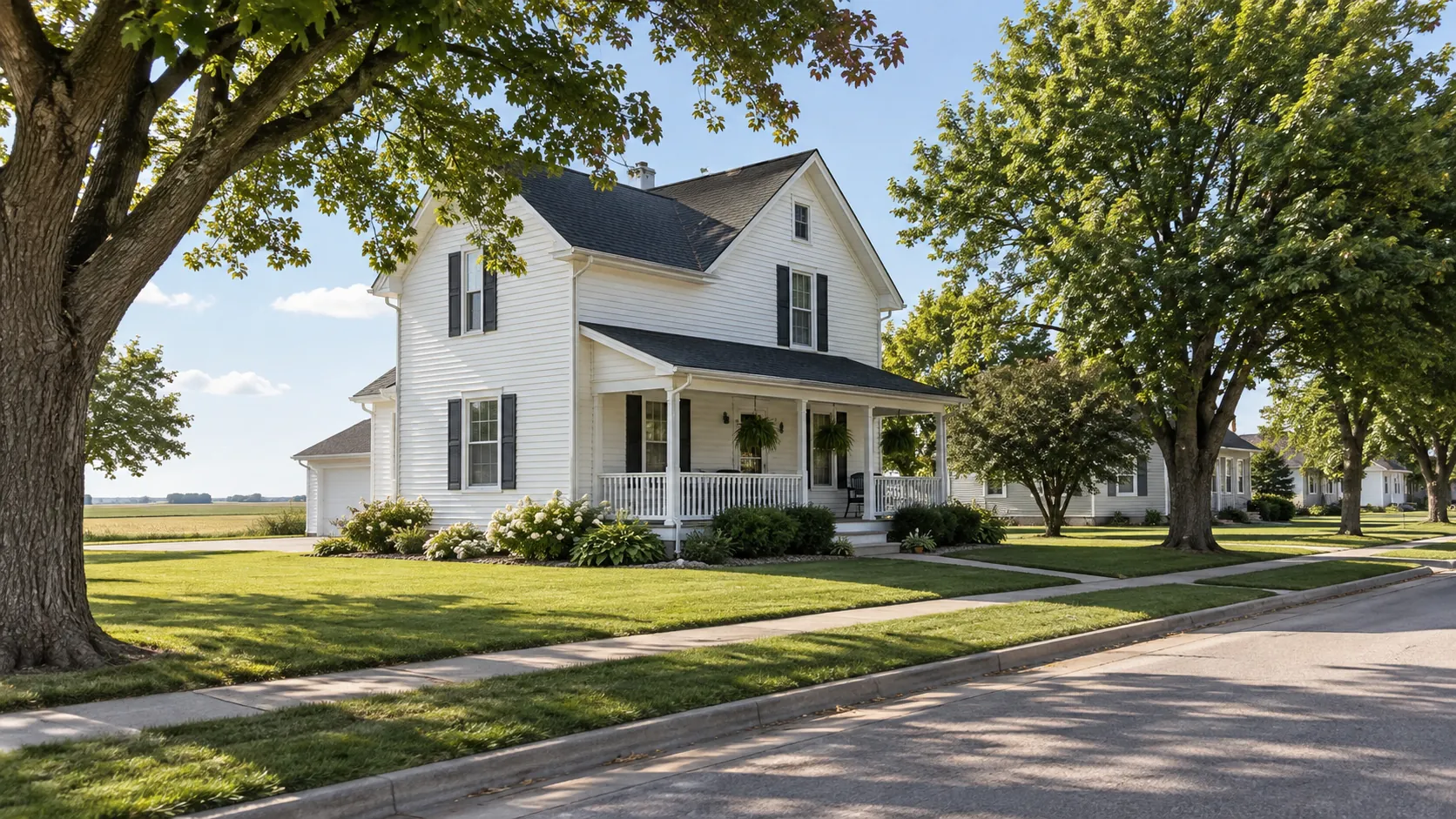
Not the lakeshore estates: the in-town streets where most Iowa Great Lakes families actually start.
The classic two-story
Porches, shade trees and sidewalks: the kind of street where most first purchases in northwest Iowa actually happen.
Questions
What do first-time buyers ask most?
The short answer: buyer representation built around someone doing this for the first time. That means explaining which Iowa and federal programs you may qualify for before you shop, building a realistic all-in monthly budget, running the search, vetting properties, structuring an offer that protects your deposit, and carrying the deal through inspection, appraisal and an Iowa closing. Stauss Realty provides it across Spirit Lake, Milford, Spencer, Arnolds Park and the wider Iowa Great Lakes.
The short answer: yes, and the entry point is usually in town, not on the shoreline. Census ACS 2024 five-year estimates put the median owner-occupied home value at about $184,800 in Spencer, $215,100 in Spirit Lake and $218,400 in Milford, against $270,700 countywide in Dickinson County. The lakeshore price tag is not the whole market. Dickinson County also carries an effective property-tax rate of 0.78%, tied for Iowa’s lowest.
The short answer: an Iowa savings account whose contributions you can deduct from your Iowa income. Under Iowa Code ch. 541B, you open a dedicated account at a financial institution and name a first-time-buyer beneficiary. For tax year 2026 the Iowa Department of Revenue puts the deduction limit at $4,744 for married filing jointly and $2,372 for other filers, indexed annually, with a lifetime cap of ten times the annual limit. Funds can go toward the down payment and costs listed on your Closing Disclosure. Confirm details with your tax preparer; this is general information, not tax advice.
The short answer: yes, and they get the deduction. Iowa law lets an account holder name someone else as the designated beneficiary, so a parent or grandparent can open an account for a first-time buyer and take the Iowa deduction themselves. Anyone can contribute to the account, though only the account holder deducts. Two practical rules: the purchase must come at least ninety days after the account is first opened, and the reporting obligations sit with the account holder, not the bank.
The short answer: far less than most people assume, sometimes nothing. USDA guaranteed loans require no down payment in eligible rural areas. VA loans require none for eligible veterans and service members. FHA requires 3.5% with a credit score of 580 or above. Fannie Mae HomeReady and Freddie Mac Home Possible allow 3% down for buyers at or below 80% of area median income. Nationally, NAR’s 2025 research put the median first-time buyer down payment at 10%, well under the 20% many people still believe is required.
The short answer: USDA’s own eligibility map currently shows the Iowa Great Lakes communities in eligible rural territory, but eligibility is address-specific, so check yours on USDA’s map. USDA states plainly that viewing the map does not constitute a final determination, which is made only on a complete application. Two honest caveats worth knowing up front: household income must fall under the applicable moderate-income limit, and the program requires that the applicant be unable to obtain traditional conventional mortgage credit.
The short answer: a mortgage program plus down payment help. FirstHome serves buyers who have not owned a primary residence in the last three years, with a minimum 640 credit score, a $566,000 purchase-price limit and county-based income limits running roughly $102,100 to $171,360. Down payment assistance comes as either a $2,500 grant or a second loan of up to 5% of the price with no monthly payments; one or the other, not both. Eligible service members and veterans can access a separate $5,000 Military Homeownership grant. Program terms change; confirm current details with the Iowa Finance Authority.
The short answer: you may still have options. Iowa’s FirstHome program counts you as a first-time buyer if you have not owned your primary residence in the last three years, and military buyers and those purchasing in targeted areas can qualify regardless. Separately, the Iowa Finance Authority’s Homes for Iowans program serves first-time and repeat buyers alike, with a 640 minimum credit score and 2026 limits of $171,360 income and $692,000 purchase price. Coming back to the lakes after a move or a divorce does not put you out of the running.
The short answer: for several programs, yes. The Iowa Finance Authority requires homebuyer education for all borrowers under both FirstHome and Homes for Iowans, and Fannie Mae requires it for HomeReady purchases where all occupying borrowers are first-time buyers. USDA’s direct loan program requires it for first-time buyers, while its guaranteed program leaves it to the lender. Free HUD-approved housing counselors are also available through the CFPB and HUD counselor directories, independent of any lender.
The short answer: it is insurance you pay for on a conventional loan with less than 20% down, and it ends. The CFPB describes three exits: you may request cancellation when the balance is scheduled to reach 80% of the home’s original value; the servicer must terminate it automatically at 78%; and it must end the month after you reach the midpoint of the loan’s amortization schedule. FHA, VA and lender-paid mortgage insurance follow different rules. Three percent down does not mean paying mortgage insurance forever.
The short answer: your lender must give you the Closing Disclosure at least three business days before closing. The CFPB explains the purpose plainly: the window exists so you can compare your final terms and costs against the Loan Estimate you received earlier. It is a right, not a courtesy, and a good buyer’s agent makes sure you actually use it, reading the two documents side by side before anyone signs anything.
The short answer: it lowers your property taxes, and yes, a new buyer has to file for it. Iowa replaced the homestead credit with a homestead exemption of 10% of taxable value, subject to a $5,500 minimum and $20,000 maximum, under an act signed May 18, 2026 and applied retroactively to assessment year 2026. Iowa Code § 425.2 provides that when a property is sold the buyer who wishes to qualify must refile, and the claim must be filed no later than July 1 of the claim year. File by July 1 for the claim year; later filings generally apply to a later assessment year, exactly the kind of thing a local agent reminds you about.
The short answer: lender fees, prepaid taxes and insurance, and Iowa’s abstract-and-attorney title work, all itemized on your Closing Disclosure. Iowa closes differently from most states: rather than conventional title insurance, the abstract of title is updated and examined by an attorney, optionally backed by an Iowa Title Guaranty certificate. On USDA guaranteed loans a seller or other interested party may contribute up to 6% of the sales price toward financing and closing costs, a genuinely useful negotiating lever when cash is tight. Our closing costs guide breaks it down further.
The short answer: on an FHA loan, yes, if they are family. FHA caps non-occupying borrower transactions at 75% loan-to-value, but the handbook allows that to rise to 96.5% when the borrowers are family members, subject to conditions including that it is not a family member selling to a family member who will be a non-occupying co-borrower, and not a two-to-four unit property. It is one of the more useful and least-discussed options for a first-time buyer with thin income but strong family support.
The short answer: yes, and in this market check the septic and the well too. Much of the housing around the lakes predates modern codes, and properties outside the regional sanitary district run on private septic systems, where Iowa Code § 455B.172(11) requires a certified time-of-transfer inspection before the deed can be recorded. Iowa’s groundwater hazard statement also discloses known wells and systems at transfer. On a first purchase these are exactly the items worth having someone chase on your behalf.
The short answer: the search varies; the closing runs several weeks. Iowa homes sold in a median of 16 days statewide in July 2026 per the Iowa Association of REALTORS, so prepared buyers with financing arranged have a real advantage. After acceptance, allow several weeks for the appraisal, underwriting and Iowa’s abstract-and-title work. If you are using a program with an education requirement, start that early; it should never be the thing holding up your closing.
The short answer: choose someone who explains rather than rushes. Ask whether they can walk you through FirstHome, USDA, FHA and the Iowa first-time homebuyer savings account without checking their phone; how they build an all-in monthly number rather than quoting a payment; and what they do at inspection on an older home. Ask for the written buyer agreement up front so services and compensation are clear. Stauss Realty’s agents have spent their lives on these lakes and hold a 4.9-star Google rating.
In Summary
Buying your first home in the Iowa Great Lakes is more achievable than the headlines suggest, if you know what exists. First-time buyers are a record-low 21% of the national market and the median first-timer is now 40, but the entry point here is in town rather than on the shore: roughly $184,800 in Spencer, $215,100 in Spirit Lake, $218,400 in Milford. Iowa adds real help: an income-tax deduction for money saved toward a first home, FirstHome down payment assistance, a homestead exemption you must claim by July 1, and USDA rural-development eligibility that many properties in and around these communities fall within, a lane with no down payment required, subject to address and borrower eligibility. FHA asks 3.5%, conventional programs 3%, and the national median first-time down payment is 10%, not 20%. The job of a first-time buyer’s agent is to put all of that on the table before you shop, build a monthly number you can live with, and make sure nothing gets signed unexplained.
Let’s Talk
Start before you’re ready
You do not need a pre-approval, a down payment or a plan to have this conversation. Tell us where you are, and you’ll get an honest read on what’s possible, what it would cost, and what to do next, even if the answer is “not yet.”
By proceeding, you consent to be contacted by Stauss Realty about real estate related matters by phone, email, or text at the contact details provided, but not as a condition of purchase. Message frequency varies; message and data rates may apply; reply Stop to cancel.