

Kirk Stauss & the Stauss Realty Team, Okoboji, Iowa
Lakefront Property Sales & Acquisition in Okoboji, Iowa
Lakefront property sales and acquisition on West Okoboji, East Okoboji and Big Spirit turn on frontage, dock permits, shoreline rules and water depth, which decide value as surely as the house does.
The Iowa Great Lakes · Iowa DNR data
Overview
What does buying or selling lakefront property in Okoboji involve?
Everything an ordinary sale involves, plus the waterline, and the waterline is regulated. Frontage and shoreline condition drive value, the dock and hoists out front are state-permitted structures that do not transfer automatically with the deed, shoreline work falls under Iowa DNR rules, and a property on a private septic system cannot have its deed recorded until a certified inspection is complete. Stauss Realty represents buyers and sellers of lakefront property across West Lake Okoboji, East Lake Okoboji, Big Spirit Lake and the connected waters, and handles every one of those pieces.
This is the work our firm was built around. Lakefront is not a category of house; it is a category of ownership, with its own statutes, its own seasonal rhythm, and its own way of storing value. A dock in the listing photos may not be the dock a buyer is permitted to keep. A beautiful sand beach may be lawfully grandfathered, and legally impossible to reproduce next door. Two identical homes a hundred feet apart can carry very different hoist capacity because Iowa writes that capacity as a formula against feet of shoreline. Our buyer representation and seller representation pages cover the fundamentals; this page is about what the water adds. If the water you want comes with shared walls and an assigned slip, see Okoboji condo buying and sales; for estate-level frontage, see luxury lake home buying and sales.
The Water
What makes Iowa Great Lakes lakefront different?
The short answer: the water itself: deep, clean, state-protected, and watched by scientists for over a century. That is the asset the frontage is attached to.
Start with the lakes. West Lake Okoboji covers 3,847 acres and reaches 138.9 feet deep: Iowa’s deepest natural lake; East Lake Okoboji adds 1,835 acres of calmer, connected shoreline; Big Spirit Lake is the largest of the trio at 5,684 acres (Iowa DNR). These are glacial lakes, not impoundments, which is why the water behaves the way it does.
Then the part most markets cannot claim: West Okoboji and Big Spirit both appear on the Iowa DNR’s Outstanding Iowa Waters list; only 33 waters statewide carry it, a designation for high quality waters of state significance to be protected from unnecessary pollution, written into Iowa’s water quality standards as a ceiling on degradation. That status did not happen by accident. The regional sanitary district began pulling sewage off this shoreline in 1937, with treatment operating by 1939; by the early 1960s the sewer ringed West Okoboji and by the 1970s it reached Big Spirit (today more than 100 miles of line and 64 lift stations). Okoboji was protecting its own water before most of the country had thought about the problem. And Iowa Lakeside Laboratory has studied this lake from its west shore since 1909, run cooperatively by three state universities across roughly 140 acres of restored prairie, wetland and forest.
What that means commercially is simple: the thing that makes lakefront valuable here is durable, protected and locally specific, and it is a fair part of why frontage on these lakes holds its value. What it does not mean is a published price index. There is no audited lakefront dataset for the Iowa Great Lakes; the Iowa Association of REALTORS publishes statewide figures only ($280,000 median, 16 days on market, July 2026). Any honest lakefront valuation is built per property, frontage compared to frontage, from current comparable sales.
The three lakes, by Iowa DNR data
| Lake | Surface Acres | Max Depth | Character |
|---|---|---|---|
| West Lake Okoboji | 3,847 | 138.9 ft | Iowa’s deepest natural lake; Outstanding Iowa Water; steeply shelving shoreline |
| East Lake Okoboji | 1,835 | 21 ft | Long, calmer, connected shoreline linking Okoboji toward Spirit Lake |
| Big Spirit Lake | 5,684 | 22.5 ft | Largest of the trio; Outstanding Iowa Water; open water and big skies |
Sources: Iowa DNR lake records for West Okoboji, East Okoboji and Spirit Lake; Iowa DNR Outstanding Iowa Waters and Iowa Admin. Code 567-61.2(2)”c”; Iowa Great Lakes Sanitary District history; University of Iowa catalog, Iowa Lakeside Laboratory; Iowa Association of REALTORS, July 2026. Market data moves monthly.
How much frontage are you actually buying, and what does it allow?
We’ll read the frontage, the water depth and the dock permit together, before an offer depends on any of them.
What’s Included
What services does an Okoboji lakefront specialist provide?
The short answer: five things: frontage valuation, dock and hoist permit diligence, shoreline and sovereign-lands review, septic transfer coordination, and waterfront marketing or negotiation.
Frontage valuation, done honestly
Shoreline footage and condition, water depth off the dock, orientation and evening light, and whether beach or canal frontage is lawfully grandfathered, weighed against genuinely comparable lakefront sales. No county averages, no invented lakefront index.
Dock & hoist permit diligence
Which permit class the dock holds, whether it carries exceptions that expire at transfer, how many hoists the frontage supports, and the transfer request the new owner must make to the DNR. Checked before the offer, not discovered in May.
Shoreline & sovereign-lands review
What sits above and below the ordinary high water mark, what rip-rap and retaining structures are permitted, whether existing work was lawfully permitted, and whether any sovereign-lands permit needs to move with the sale. Iowa fines shoreline violations per day; this matters.
Septic time-of-transfer coordination
Is the property on the regional sewer or a private system? If private, a DNR-certified inspection is required before transfer, and the recorder will not record the deed without it. We schedule it early, in good weather, because the report stays valid for two years.
Waterfront marketing, negotiation & closing
For sellers, photography and a listing that shows the water the way buyers actually evaluate it: frontage, depth, dock, orientation, evening light. For buyers, offers priced on evidence with the waterline items written into the contract: what conveys, which permits transfer, who handles the septic inspection. Then the groundwater hazard statement, the abstract and attorney title opinion, and every deadline tracked to the day, with remote closings routine.
The Waterline
What decides lakefront value at the waterline?
The short answer: four things the house cannot change: how much frontage you have, how deep the water is, what the dock permit allows, and whether your beach or canal is grandfathered.
| Factor | What Governs It | Why It Moves the Money |
|---|---|---|
| Feet of frontage | Your deed, and Iowa’s dock rules, which cap a nonstandard private dock at one hoist per ten feet of shoreline | Frontage is not only the view and the privacy; state rules turn it into a hoist-count formula, so it literally determines how many boats the property can keep |
| Water depth off the dock | Dock length rules: on a natural lake, the greater of 100 feet or far enough that the outer section sits in three feet of water, to a 300-foot maximum | Steep West Okoboji frontage reaches boatable water quickly; a gradual shoreline may need far more dock. Different cost, different experience, same listing price |
| Dock class & exceptions | Iowa DNR permit classes: Class I standard private, Class III nonstandard, Class IV commercial | A standard Class I permit covers one dock and up to two hoists; anything larger needs Class III with fees, and exceptions granted to the seller expire at transfer |
| Grandfathered beach or canal | Sovereign-lands rules: existing beaches, canals and channels lawfully in place as of April 15, 2009 may be maintained; new ones may not be permitted | Sand beach and canal frontage cannot be created or enlarged on these lakes any more, which makes lawfully grandfathered frontage genuinely finite |
Sources: Iowa Admin. Code 571-ch. 16 (docks and other structures on public waters) and 571-ch. 13 (permits and easements for construction on public lands and waters), official text via legis.iowa.gov, current 2026. Permit terms are property-specific; confirm the actual permit and any exceptions with the Iowa DNR before relying on them. General information, not legal advice.
Is the dock in the listing photos the dock you would be allowed to keep?
Send us the address. We’ll check the permit class and its exceptions before you write anything.
Verify First
What should you verify before buying lakefront?
The short answer: four things: the dock permit, the sewer or septic question, the shoreline work, and the flood zone. All four are knowable before you offer.
The dock permit & its exceptions
Which class, how many hoists, what exceptions it carries, and the fact that a Class I permit ends when the property sells, so the new owner must request the transfer. Exceptions for oversized or nonstandard docks expire at transfer, and the new owner must bring the dock into compliance.
Sewer or septic?
Much of the lake ring is on the regional sanitary district; many near-lake properties are not. If it is on a private system, Iowa’s time-of-transfer inspection applies, and the deed cannot be recorded without a certified inspector’s report or a binding agreement with the county board of health.
Was the shoreline work permitted?
Rip-rap, retaining walls, steps and any structure at the water are regulated. Iowa limits erosion protection to native stone rip-rap reaching no more than four feet past the high-water contour, bars fill inside it, and can assess penalties per day for unauthorized work, so existing work should be confirmed as permitted, not assumed.
The flood zone
Flood-zone status is parcel-specific, published by FEMA through its Flood Map Service Center, and lenders require flood insurance in a Special Flood Hazard Area. Since the premium is a permanent carrying cost, it belongs in your math at the first showing, not at underwriting.
What to Expect
How does a lakefront transaction work in Okoboji?
The short answer: four stages: consultation and waterline review, search or launch, offer with the permits written in, then contract to a closing that clears the recorder.
Consultation & waterline review
Goals, budget (with a mortgage pre-approval) or pricing, the written agreement, and the first waterline questions: frontage, depth, dock class, sewer or septic. Sellers get the septic inspection scheduled in good weather, because the report stays valid two years.
Search or launch
Buyers tour with the permit and depth questions already asked. Sellers launch with photography that shows the water the way buyers evaluate it, and a listing that answers frontage, dock and shoreline questions up front.
Offer & permit diligence
Priced on comparable lakefront sales, with the waterline items written in: what conveys, which permits must transfer, who orders the septic inspection, and how a failed system gets handled.
Contract to closing
Home inspection, financing and appraisal, the groundwater hazard statement, the septic report, abstract and attorney title opinion, dock-permit transfer request, walkthrough, keys: remote closings handled routinely.
Iowa Law
What does Iowa law require on a lakefront sale?
The short answer: more than most owners expect: a septic inspection that gates the recording of your deed, a signed groundwater disclosure, dock permits that end at the sale, and shoreline rules with real penalties.
The septic inspection that gates your closing (Iowa Code § 455B.172(11))
What this means for you: on a septic-served property this is not a negotiable inspection. Without it, the deed does not get recorded.
Iowa requires that a building served by a private sewage disposal system be inspected before any transfer of ownership, and directs that the county recorder shall not record the deed until either a certified inspector’s report is provided, or (where weather or temporary conditions prevent inspection) the buyer has executed a binding acknowledgment with the county board of health to have it done and to be responsible for any required modifications. Only a DNR-certified inspector may perform it, the septic tank must be opened and pumped (or documented as pumped within the prior three years), and the report remains valid for two years. A failing system must be renovated, by the seller or, by agreement, the buyer, but a system that is properly treating wastewater and not creating an unsanitary condition is not required to meet current construction standards. Many lake-ring properties are on the regional sewer, in which case none of this applies. General information, not legal advice.
The groundwater hazard statement (Iowa Code § 558.69)
Filed with the declaration of value on nearly every Iowa deed, this signed statement discloses known private burial sites, wells and their status, solid waste disposal sites, underground storage tanks, hazardous waste, and any private sewage disposal system, including whether that system has been inspected under the time-of-transfer law. At least one seller or their agent signs it; the property owner is responsible for the accuracy of what it says; and without it the recorder refuses to record the deed. On a lake property with a well or a septic system, this is the document where casual answers become legal exposure.
Your dock permit ends at the sale (Iowa Admin. Code 571-16)
What this means for you: the dock does not come with the deed; the buyer has to ask for it.
A Class I private dock permit is issued without administrative fee and remains valid only until the property is sold or transferred; the new owner then requests a transfer from the Iowa DNR. More consequentially, where a permit carries exceptions (extra length, extra hoists, a nonstandard layout), those exceptions expire upon transfer, and the new owner must immediately bring the dock into compliance with current rules. A standard Class I permit authorizes one dock and up to two hoists serving one residence; a nonstandard Class III permit carries application and per-hoist fees and caps hoists at one per ten feet of shoreline.
What you own stops at the high water mark (Iowa Code § 461A.4, IAC 571-13)
Iowa holds its lakes and the land beneath them in public trust: the DNR’s rule states the commission holds those lands and waters in trust and protects the interests of all citizens. Construction on or over state-owned water requires a written permit, and a dock permit expressly creates no interest in the real estate below the ordinary high water mark. Your dock is your property; the water under it is everyone’s, subject to a public right of passage. Erosion protection is limited to native stone rip-rap extending no more than four feet past the high-water contour, fill inside that line is not allowed, and retaining walls must sit above the mark. Where a wall blocks the shoreline walk, the owner must grant the public a license to walk within fifteen feet of its top.
No new beaches or canals, and per-day penalties (IAC 571-13)
Permits may be granted to maintain beaches, canals and channels lawfully installed as of April 15, 2009, but the department shall not permit new ones or the expansion of existing ones outside limited public-access projects. Unauthorized shoreline work is not a minor risk: the department may assess a civil penalty of up to $5,000 per offense, with each day the violation continues treated as a separate offense, and may order removal. Sovereign-lands permits are transferable only on written DNR approval, so an Okoboji closing can involve two separate DNR authorizations to move, the dock permit and any construction permit.
Docks out by December 15, and check them for mussels
Iowa Code § 462A.27 requires non-permanent structures to be removed from public waters on or before December 15 each year, which is why lake docks are seasonal infrastructure with an annual in-and-out cost. The same weekend matters for another reason: zebra mussels are present in both West Okoboji and Spirit Lake per DNR lake records. In West Okoboji the 2013 infestation was confirmed by sampling boat hoists. Iowa law requires water drained from equipment when leaving an access with plugs removed during transport, and makes transporting aquatic plants illegal.
Sources: Iowa Code §§ 455B.172(11), 558.69, 461A.4, 462A.27, 462A.32 and Iowa Admin. Code 567-69.2, 571-ch. 13, 571-ch. 16; official text via legis.iowa.gov, current 2026; Iowa DNR time-of-transfer, dock permit, sovereign lands and aquatic invasive species program pages; Iowa DNR lake records. General information, not legal advice: confirm specifics with the Iowa DNR, the county board of health, or an Iowa real estate attorney.
Closing Mechanics
What happens between offer and closing on lakefront?
The short answer: the ordinary Iowa closing, plus three waterfront items that can stop a recording if nobody handles them.
| Step | How It Works | Advisory Note |
|---|---|---|
| Offer & what conveys | Dock sections, hoists, lifts, shore stations and often furnishings written into the contract | Lake equipment is the classic assumption problem. Write it down rather than remember it differently in April. |
| Septic time-of-transfer inspection | DNR-certified inspector; tank opened and pumped, or pumping documented within three years | Schedule early. Frozen ground in January doesn’t stop the closing (the buyer can sign a binding agreement with the county board of health), but that shifts the unknown onto the buyer. |
| Groundwater hazard statement | Signed by a seller or their agent, filed with the declaration of value | Wells, septic and tanks disclosed here; the owner is responsible for accuracy, and the recorder refuses the deed without it. |
| Dock permit transfer | The buyer requests transfer of the Class I permit from the Iowa DNR | The permit ends at the sale. Any exceptions on the seller’s permit expire; confirm what the new owner is actually allowed to install. |
| Abstract & title opinion | The abstract of title (the record of the property’s ownership history) updated and examined by an attorney; Iowa Title Guaranty may back the opinion | Iowa’s system, not conventional title insurance. Long-held family lake property can mean a long hunt for the abstract; start early. |
| Walkthrough & closing | Condition and the full conveyance list verified shortly before closing | Confirm the dock and hoists are as contracted, and that shoreline work matches what was represented. Remote closings routine. |
Sources: Iowa Code §§ 455B.172(11), 558.69, 16.91; Iowa Admin. Code 567-69.2 and 571-16; Iowa DNR dock permit portal. Timelines are customary contract terms, not statutes; your purchase agreement controls. General information, not legal advice.
Representation, Compared
How does a lakefront specialist change the transaction?
The short answer: in five places: how frontage is priced, whether the dock survives the sale, whether shoreline work is lawful, whether the septic clears the recorder, and how the whole thing is negotiated.
| Factor | Without Lakefront Experience | With Stauss Realty |
|---|---|---|
| Pricing the frontage | County averages and online estimates that have never measured a shoreline | Frontage compared to frontage, with depth, orientation and grandfathered features weighed |
| The dock | Assuming the dock in the photos comes with the house | Permit class and exceptions checked before the offer, and the transfer request handled at closing |
| Shoreline work | Inheriting rip-rap or a wall nobody confirmed was permitted | Existing work reviewed against Iowa’s sovereign-lands rules, where penalties run per day |
| Septic & disclosure | Discovering the time-of-transfer requirement the week of closing | Inspection scheduled early in good weather; groundwater hazard statement handled properly |
| The negotiation | Trading on price alone, with the waterline items unresolved | Evidence-priced offers with permits, conveyance and septic responsibility written in |
Buying or selling unrepresented is legal in Iowa. Nationally, 88% of buyers and 91% of sellers used an agent or broker in NAR’s 2025 Profile of Home Buyers and Sellers. There is no audited dataset comparing represented and unrepresented lakefront outcomes here, so we don’t invent one; happy to walk through your specific shoreline instead.
Which lake, how much frontage, and what does the permit allow?
Three questions that decide most lakefront purchases. We’ll answer them before you commit to anything.
How We Work
How do we run a lakefront transaction?
The short answer: in three phases: read the waterline, position the property or the search, then negotiate and clear the closing.
Read the waterline
Before price or photos, the shoreline gets understood.
- Consultation: goals, lake preference, how you’ll use the water
- Written agreement: every term on paper first
- Frontage, depth, dock class and permit exceptions established
- Sewer or septic confirmed; inspection scheduled if needed
Position & pursue
The water gets presented, or evaluated, properly.
- Photography that shows frontage, depth and evening light
- Listings that answer dock, shoreline and sewer questions up front
- Buyer tours with permit and depth questions already asked
- Shoreline work reviewed against DNR rules
Negotiate & clear
Lakefront deals are won and lost in the paperwork.
- Offers priced on comparable lakefront sales
- Conveyance, permits and septic responsibility written in
- Groundwater hazard statement and septic report handled
- Dock-permit transfer requested; abstract and attorney coordinated
Why Stauss Realty
Why work with an Okoboji lakefront specialist?
The short answer: because the waterline is where lakefront deals are decided, and reading it takes a lifetime on these particular lakes.
The team’s background and approach are detailed on the About Stauss Realty page, with client words on the testimonials page. No specific future outcome is promised; read these alongside the verified sources cited throughout.
Waterline fluency
Frontage, depth, dock classes, permit exceptions and shoreline rules, read properly, before they become somebody’s expensive surprise.
Bay-by-bay knowledge
Where the water shelves, where the evening light lands, which canals and harbors the state treats differently: learned by living here, not by studying a map.
Septic & sewer clarity
Which properties sit on the regional sanitary district and which need a certified time-of-transfer inspection, established early, not the week of closing.
Full transaction management
Inspectors, lender, abstractor, attorney, DNR permits and walkthrough coordinated to the day, without substituting for legal or tax advice.
Your Agent
Who is Kirk Stauss, and how does he help lakefront buyers and sellers?
The short answer: Kirk Stauss is the broker and founder of Stauss Realty, with an office in Okoboji, and has helped people buy and sell on the Iowa Great Lakes for nearly 30 years. He and a team of lifelong locals represent lakefront buyers and sellers on West Okoboji, East Okoboji and Big Spirit, handling the frontage, the dock permit, the septic question and the closing together.
Who does Kirk help with lakefront property?
Buyers and sellers on every kind of Iowa Great Lakes shoreline.
- Buyers comparing frontage across West Okoboji, East Okoboji and Big Spirit
- Families selling a long-held lake property, where the abstract can take time to locate
- Sellers on a private septic system who need the time-of-transfer inspection scheduled early
- Sellers whose dock permit carries exceptions a buyer will ask about
- Buyers of channel-front or grandfathered beach and canal frontage
- Out-of-state buyers and sellers who need remote closings
What lakefront problems does Kirk solve?
The waterline items that stall or sour a lake sale.
- A dock in the listing photos the new owner may not be allowed to keep
- Frontage priced from county averages instead of comparable lakefront sales
- A septic inspection discovered the week of closing, with the deed unable to record
- Rip-rap or a retaining wall nobody confirmed was permitted
- Dock sections, hoists and lifts left out of the contract
- Flood insurance surfacing at underwriting instead of at the first showing
Why work with Kirk Stauss on lakefront property?
Local experience you can check before you commit.
- Broker and founder of Stauss Realty, with an office in Okoboji
- Nearly 30 years helping people buy and sell on the Iowa Great Lakes
- A team of lifelong locals who know where the water shelves and where the evening light lands
- A 4.9-star Google rating, verified September 2026
- Serves 9 Iowa Great Lakes communities, consultation to closing
Lakefront Life
What does lakefront ownership actually look like?
Clear water, open horizons, a dock you maintain and a team that knows the shoreline: the reality behind the listing photos. Buying a lake place for summers and weekends? Our second home buying and vacation home buying guides cover seasonal ownership, and our Okoboji and Spirit Lake community guides cover the towns ashore.
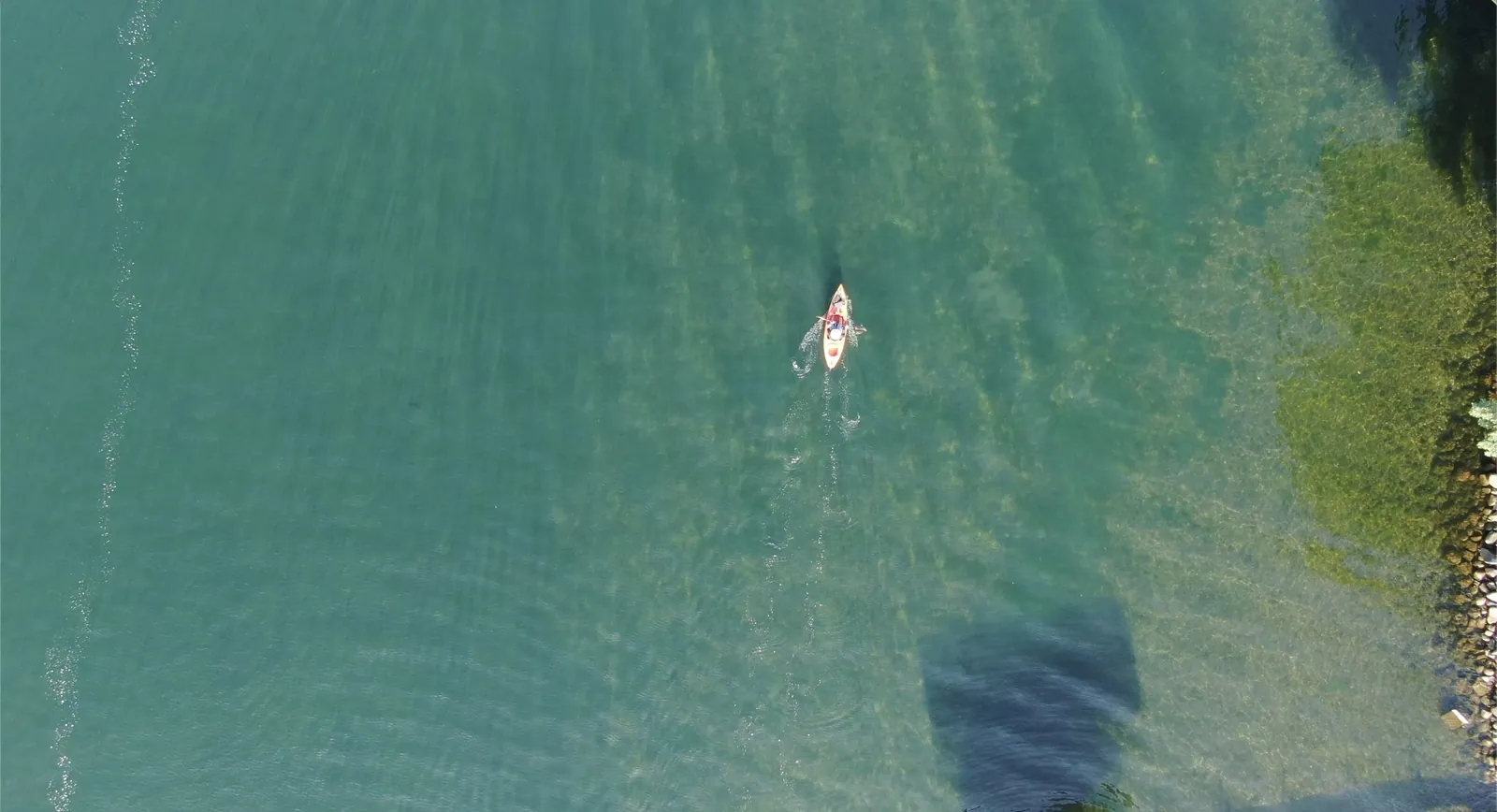
Water you can see through
West Okoboji’s clarity is the asset your frontage attaches to, one of only 33 waters statewide carrying Iowa’s highest water-quality designation.
Questions
What do lakefront buyers and sellers ask most?
The short answer: everything a normal sale involves, plus the waterline. Frontage and shoreline condition drive value, the dock and hoists are state-permitted structures that do not transfer automatically, shoreline work is regulated by the Iowa DNR, and a septic-served property cannot have its deed recorded until a certified time-of-transfer inspection is done. Stauss Realty represents buyers and sellers across West Okoboji, East Okoboji and Big Spirit and handles each of those pieces.
The short answer: no. It ends at the sale and the buyer has to request it. Under Iowa’s dock rules, a Class I private dock permit is issued without fee and remains valid only until the property is sold or transferred; the new owner then asks the DNR to transfer the permit to their account. It is a closing-week task most people forget until the boat has nowhere to go in May, which is why we put it on the checklist at offer time.
The short answer: often no. Iowa’s rules say that where a dock permit contains exceptions (the extra length, the extra hoists, the nonstandard layout), those exceptions expire upon transfer, and the new owner must immediately bring the dock into compliance with current rules. The dock in the listing photos may not be the dock you are allowed to keep. Checking the permit class and any exceptions before the offer is written is basic lakefront due diligence.
The short answer: it depends on your permit class and your frontage. A standard Class I permit authorizes one dock and up to two hoists serving one residence. For a nonstandard Class III private dock, Iowa’s rule sets the maximum at one hoist for every ten feet of shoreline. Feet of frontage is not just a price driver on these lakes; it is written into state rules as a hoist-count formula. A canoe or kayak rack counts as a hoist; a paddleboard rack does not.
The short answer: far enough to reach boatable water, within limits. On a natural lake a standard Class I dock may extend the greater of 100 feet from the water’s edge, or far enough that the outer 50 feet sits in three feet of water, up to a maximum of 300 feet. Because West Okoboji shelves steeply and other shorelines are gradual, two properties can need very different docks, which makes water depth off the frontage a real due-diligence item, not a detail.
The short answer: yes, before December 15 each year. Iowa Code § 462A.27 requires non-permanent structures to be removed from public waters by that date, and the dock rules repeat it unless a permit condition waives it. Practically, that means an annual in-and-out service cost every lakefront owner budgets for, and it is worth asking whether the seller’s permit carries any winter-removal exemption.
The short answer: the land down to the ordinary high water mark, not the lakebed. Iowa holds its lakes and the land beneath them in public trust; the DNR’s own rule states the commission holds those lands and waters in public trust and protects the interests of all citizens. A dock permit expressly creates no interest in the real estate below the high water mark, and the public keeps a right of passage. Your dock is your property; the water it sits in belongs to everyone.
The short answer: with a DNR permit, and within tight limits. On Iowa’s meandered sovereign lakes, erosion protection is limited to native stone rip-rap extending no more than four feet horizontally within or below the high-water contour; earth fill inside that line is not allowed; and retaining walls must sit above the high-water mark, faced with stone if placed at it. One more detail worth knowing: if a wall prevents the public from walking the shoreline, the landowner must grant the public a license to walk within fifteen feet of the top of it.
The short answer: no. Iowa’s rules allow permits to maintain beaches, canals and channels lawfully installed as of April 15, 2009, but the department shall not permit new beaches, canals or artificial channels, or the expansion of existing ones, outside limited public-access projects. That makes lawfully grandfathered beach and canal frontage on these lakes a genuinely finite asset: it can be maintained, but it cannot be created or enlarged.
The short answer: if the building is on a private septic system, yes, and without it the deed cannot be recorded. Iowa Code § 455B.172(11) requires an inspection by a DNR-certified inspector before any transfer of a building served by a private sewage disposal system, and directs the county recorder not to record the deed until the report is provided or the buyer signs a binding agreement with the county board of health. An inspection stays valid for two years, so having it done in good weather before listing is the smart move.
The short answer: it must be renovated, but who pays is negotiable, and an old system that works is not automatically condemned. Iowa’s statute requires renovation to current construction standards when a system is failing or improperly functioning, by the seller or, by agreement, the buyer. It also says that if the system is properly treating wastewater and not creating an unsanitary condition, it is not required to meet current construction standards. Many lake-ring properties are on the regional sewer instead, in which case none of this applies.
The short answer: a signed disclosure filed with nearly every Iowa deed. Under Iowa Code § 558.69 it accompanies the declaration of value and discloses known private burial sites, wells and their status, solid waste disposal sites, underground storage tanks, hazardous waste, and any private sewage disposal system, including whether that system has been inspected under the time-of-transfer law. At least one seller or their agent signs it, the property owner is responsible for its accuracy, and without it the recorder refuses to record the deed.
The short answer: clean enough that the state singles these lakes out. West Okoboji Lake and Big Spirit Lake both appear on the Iowa DNR’s Outstanding Iowa Waters list; only 33 waters statewide carry that designation, defined as high quality waters of state significance to be protected from unnecessary pollution. It is not an accident of geology alone: the regional sanitary district began pulling sewage off this shoreline in 1937, and by the 1960s and 70s the sewer system ringed West Okoboji and reached Big Spirit.
The short answer: they are present, and they create real obligations for dock owners. Iowa DNR lake records list zebra mussels in both West Okoboji and Spirit Lake; in West Okoboji the 2013 infestation was confirmed by sampling boat hoists. Iowa law requires all water drained from equipment when leaving an access with plugs removed during transport, and makes transporting aquatic plants illegal. The DNR asks owners to inspect submerged equipment when pulling it for winter, feeling smooth surfaces for juveniles that feel like sandpaper.
The short answer: always, before you offer. Flood-zone status is parcel-specific and is published by FEMA through its Flood Map Service Center, and lenders require flood insurance for properties in a Special Flood Hazard Area. Because the premium becomes part of your permanent carrying cost, the zone belongs in your budget math from the first showing rather than surfacing during underwriting. We pull it early as standard practice.
The short answer: frontage compared to frontage, then everything the waterline adds. Shoreline footage and condition, water depth off the dock, dock class and hoist capacity, orientation and sunset exposure, and whether beach or canal frontage is lawfully grandfathered all move value in ways county averages cannot capture. There is no audited public lakefront dataset for the Iowa Great Lakes, so honest pricing is built per property from current comparable lakefront sales.
The short answer: not on a residential dock permit. Iowa’s rules provide that a permittee shall not charge a fee for use of the dock unless the permit is a commercial dock permit, the fee is expressly authorized, or the permittee is a homeowners association (HOA) recovering access costs. A dock extending from residential property becomes a commercial dock if mooring spaces are rented for a fee (a different permit class and fee). An HOA maintenance assessment does not trigger that.
The short answer: choose for waterline fluency. Ask whether they check the dock permit class and its exceptions before writing an offer, how they handle a septic time-of-transfer inspection in an Iowa winter, what they know about rip-rap and seawall limits, and how they price frontage against genuinely comparable lakefront sales. Stauss Realty’s agents have spent their lives on these lakes and hold a 4.9-star Google rating.
In Summary
Lakefront on the Iowa Great Lakes is a category of ownership, not just a category of house. Frontage sets value and, under Iowa’s dock rules, literally sets how many boats the property can keep. The dock permit ends at the sale and any exceptions expire with it. Shoreline armoring is limited to native stone rip-rap four feet past the high-water mark, new beaches and canals cannot be permitted at all, and unauthorized work carries penalties by the day. A septic-served property cannot have its deed recorded without a certified inspection. And beneath all of it sits water the state protects by name: West Okoboji and Big Spirit are two of only 33 Outstanding Iowa Waters, on a shoreline that started protecting itself in 1937. Sound representation reads all of that before the offer, prices the frontage on real evidence, and carries the paperwork through to a recorded deed.
Private Consultation
Start at the waterline
Tell us the shoreline you’re buying or selling: the lake, the frontage, the dock. You’ll get a straight read on value, on what the permits allow, and on what the closing will require.
By proceeding, you consent to be contacted by Stauss Realty about real estate related matters by phone, email, or text at the contact details provided, but not as a condition of purchase. Message frequency varies; message and data rates may apply; reply Stop to cancel.